Anne Leroy
In the Field of Tension Between the Absent Original and Its Technical Reproducibility
In the Field of Tension Between the Absent Original and Its Technical Reproducibility

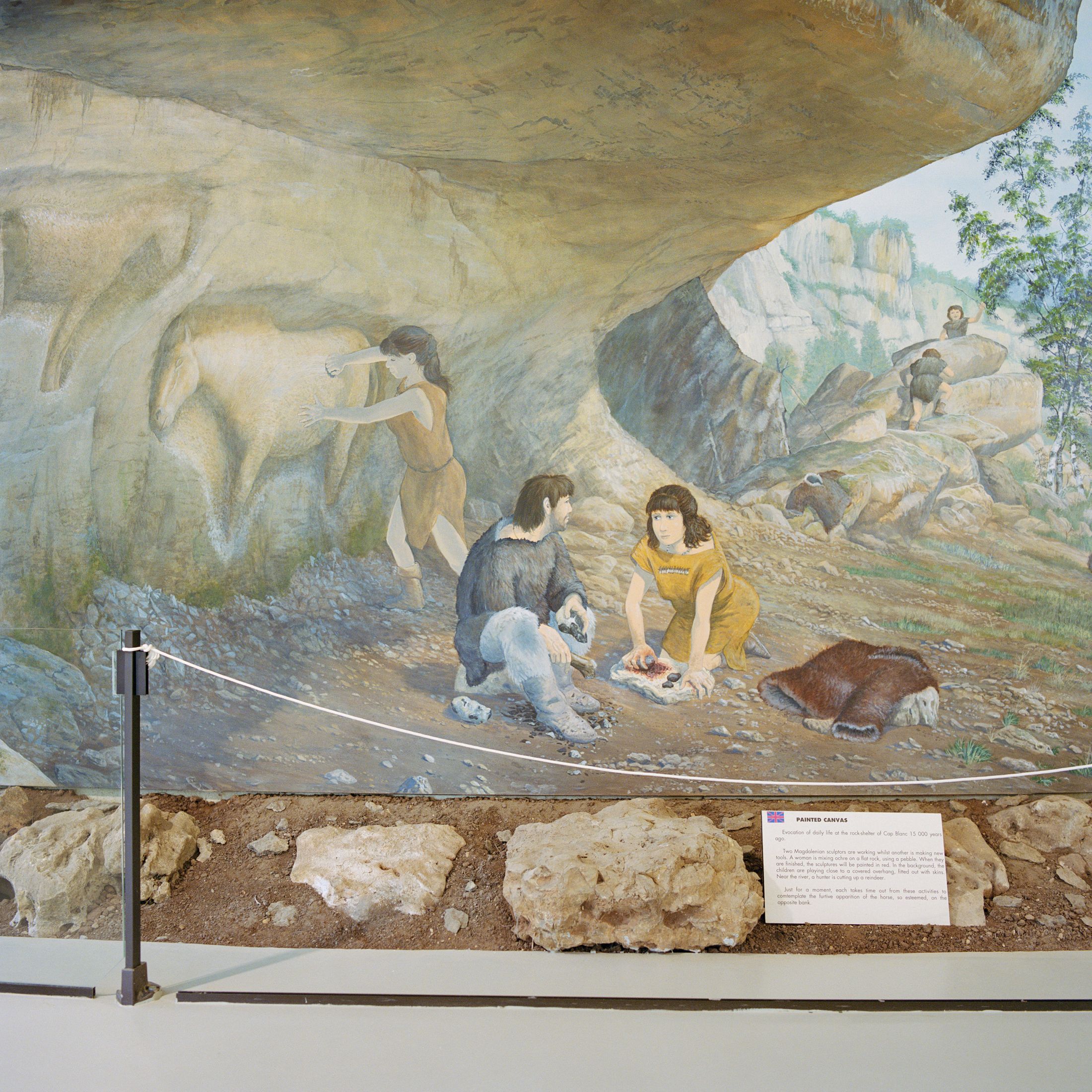

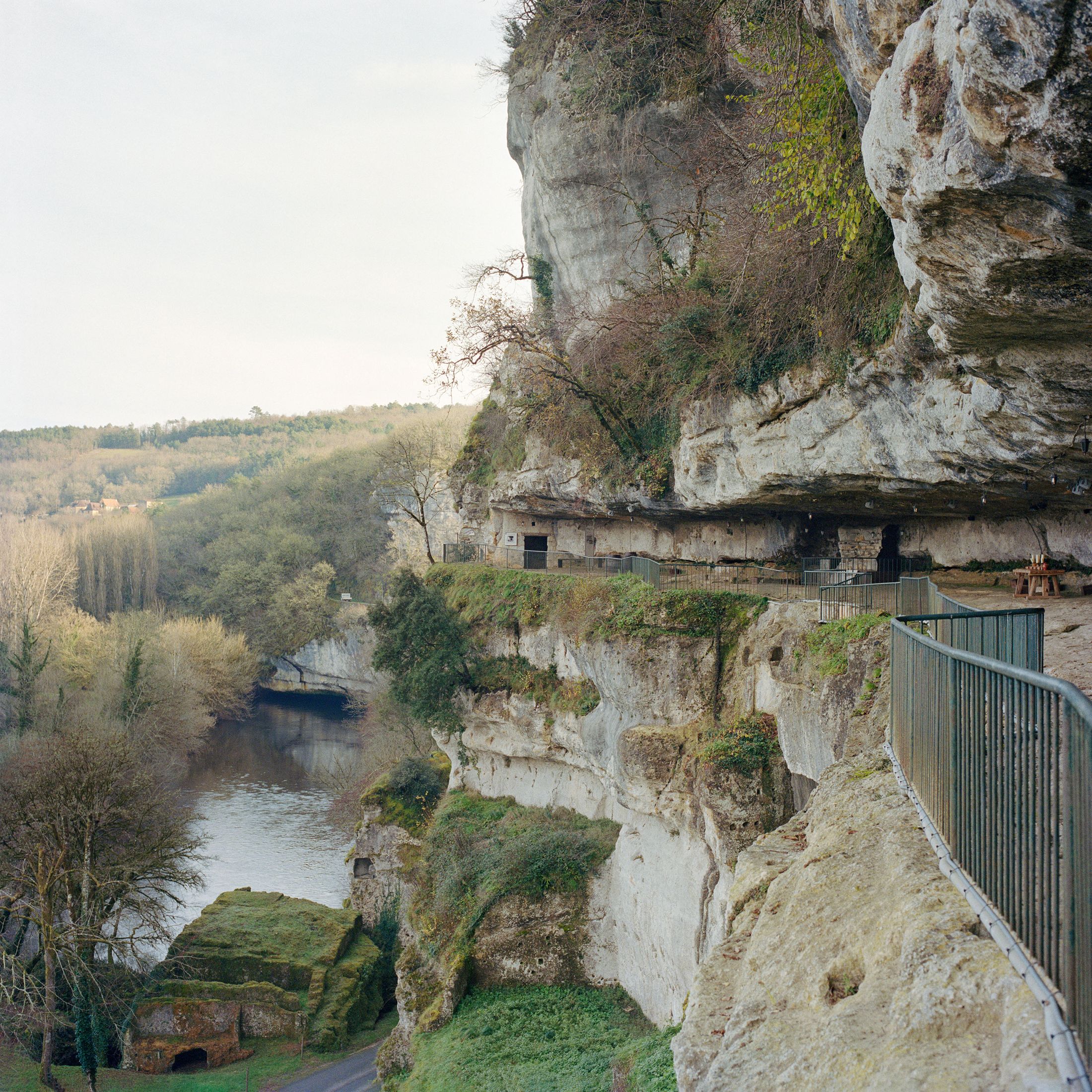
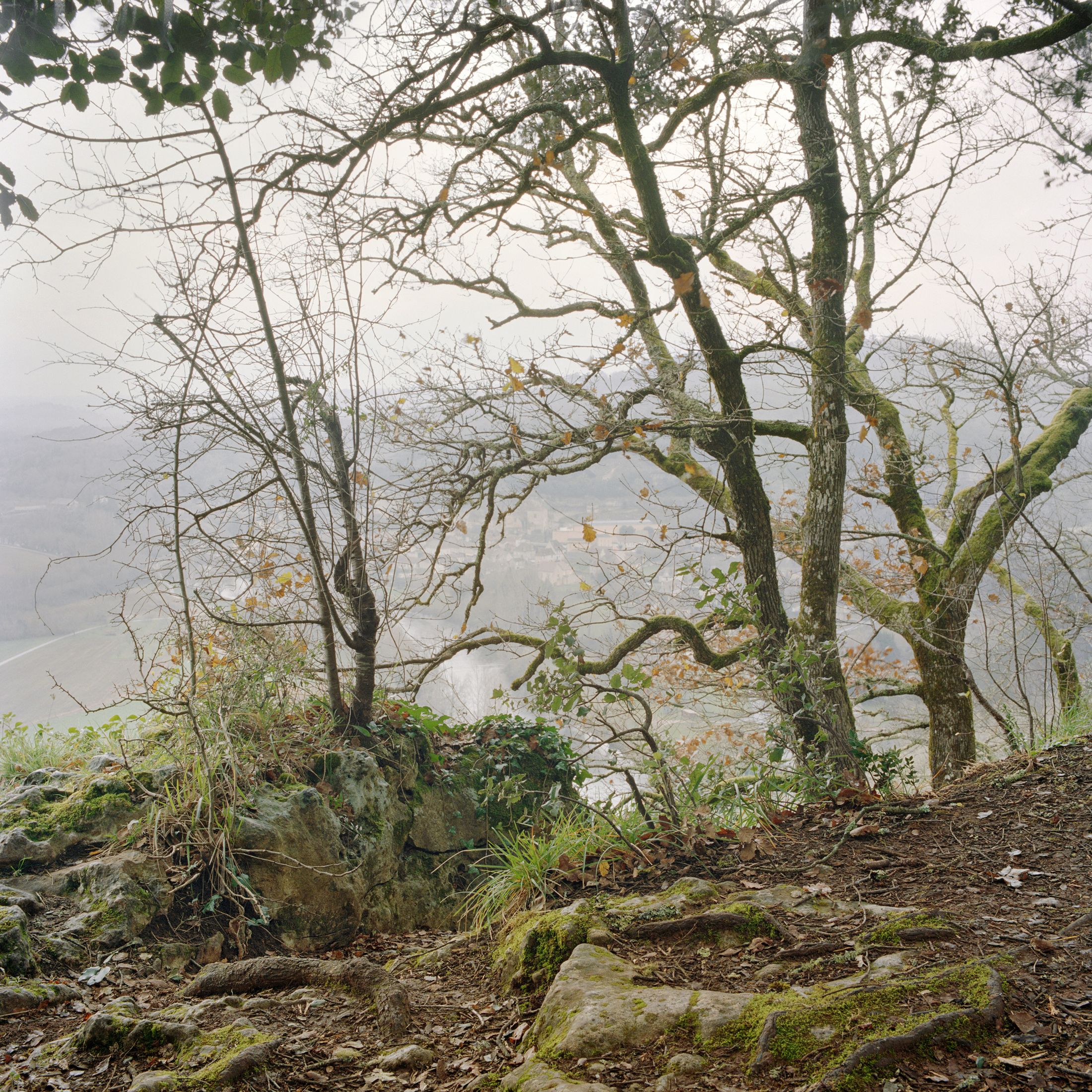
In her photo essay C’était le diable qui se vengeait (It Was the Devil Taking His Revenge), the French artist Anne Leroy captures sites shaped by millennia of human history. The landscape of the Vézère Valley in southwestern France is particularly rich in prehistoric finds and cave paintings. The most famous of these is Lascaux. Over the course of the twentieth century, the discovery of these caves led to the revitalization of this remote rural region through modern tourism.
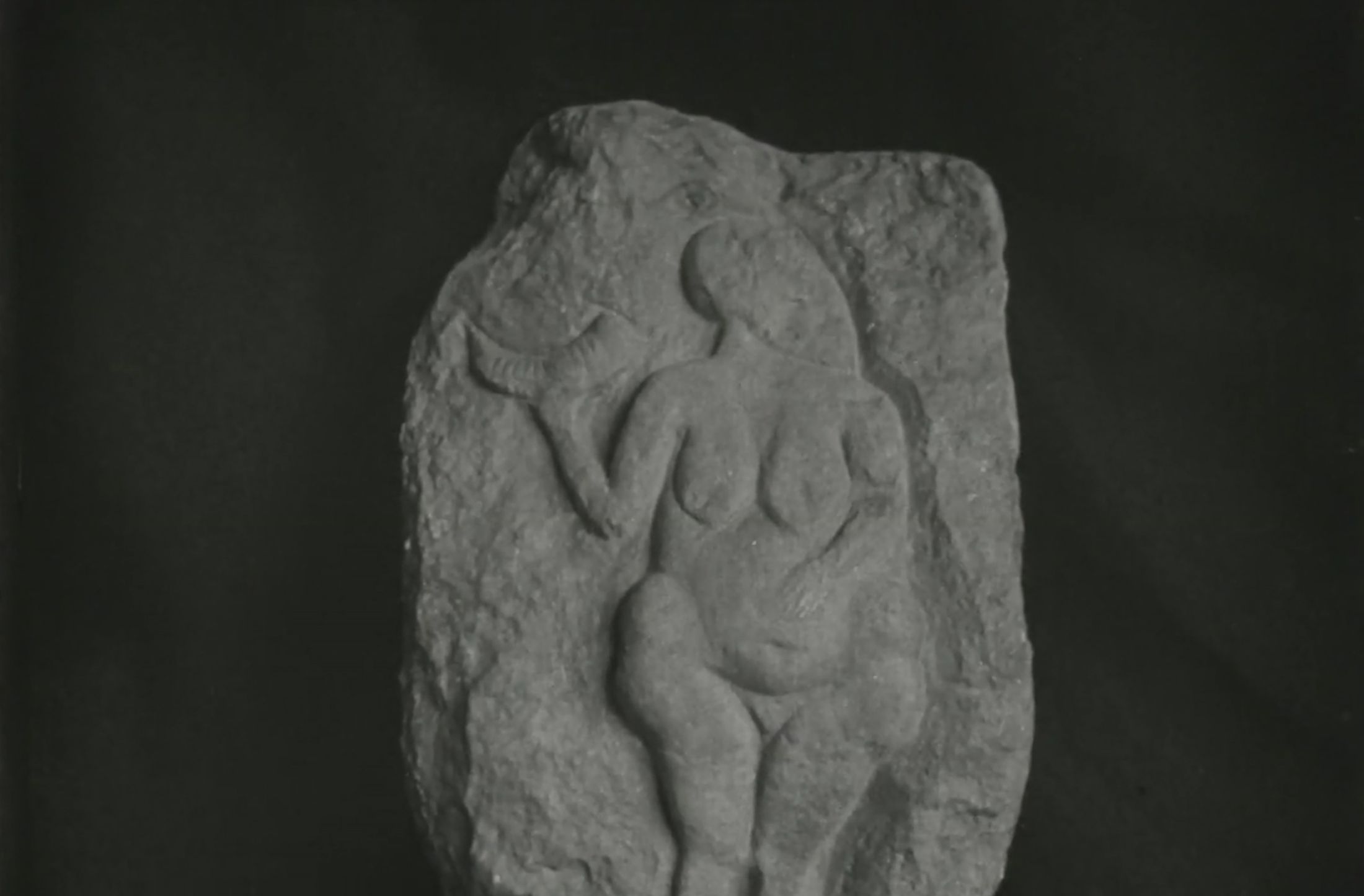
Through an observational visual language in which color photographs, monochrome images, and historical film stills alternate in sequence, Anne Leroy develops a discursive archaeology of specific sites around which complex constellations of narratives have formed. By unfolding an image-analytical dimension akin to the theoretically grounded “critical realism” practiced by Allan Sekula, the artist, through the presence of her documentation, makes visible the complex interweaving of the temporal dimensions contained within the respective sites.
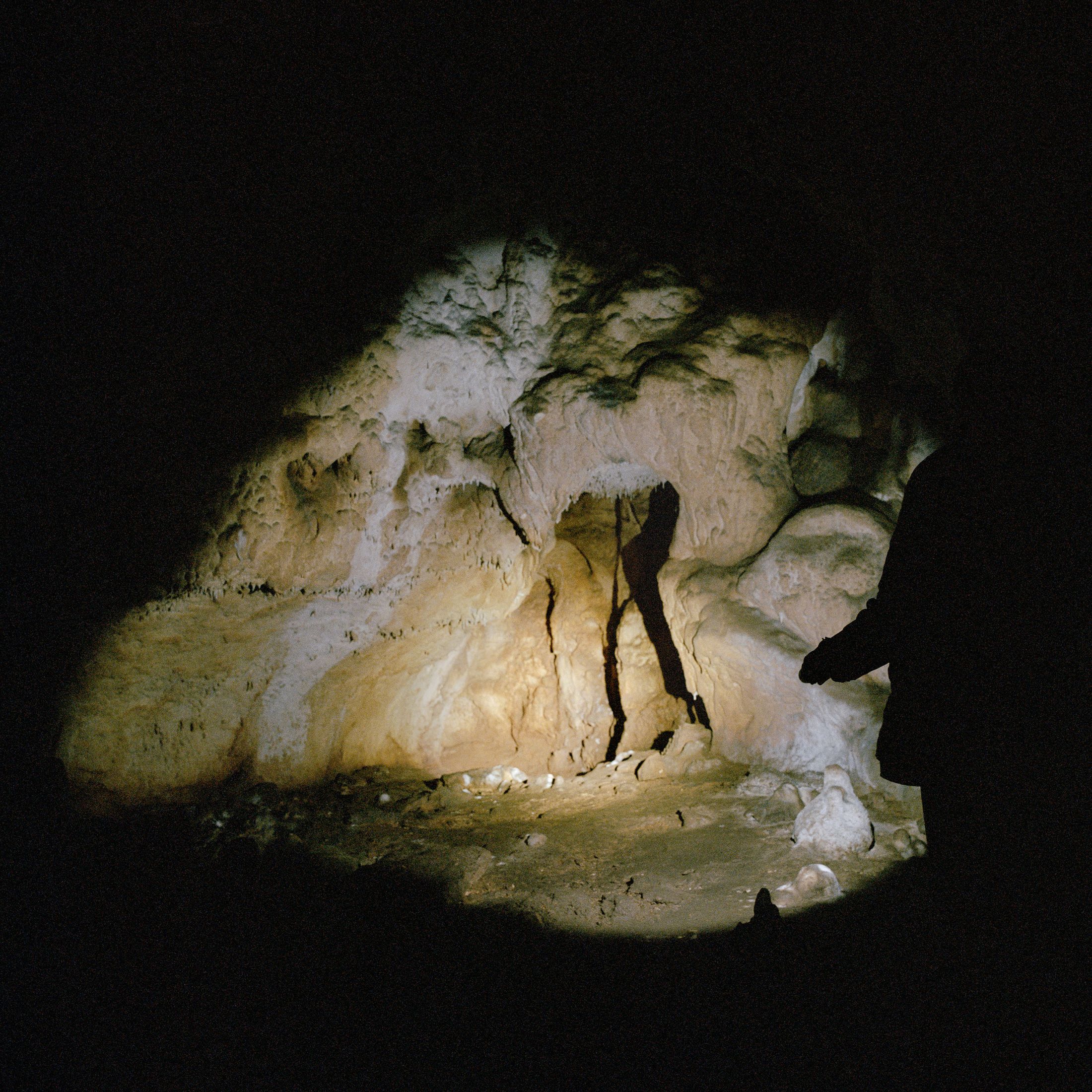
The phenomenon of reconstitution runs like a thread through the images. The original is often far away, protected behind the thick copper doors that seal off the caves. Everything, from the casts of the walls of Lascaux intended for their replica (Lascaux III) to the transport crates of the traveling exhibition and the restoration workshops of the facsimiles, paradoxically exists in the field of tension between the absence of the originals and their technical reproducibility.
Anne Leroy speaks of the “spirit of places” to describe the methodology of her research. And indeed, despite the artificiality of their staging, it is the aura of the original images that is evoked. Visitors are not depicted. Rather, Anne Leroy is interested in the traces of the activities of those people who live in the Dordogne today and whose existence is closely linked to the presence of humanity’s earliest images—a humanity that, in the twenty-first century, is beset by the premonition of its own finitude. (Translation: Gérard A. Goodrow)
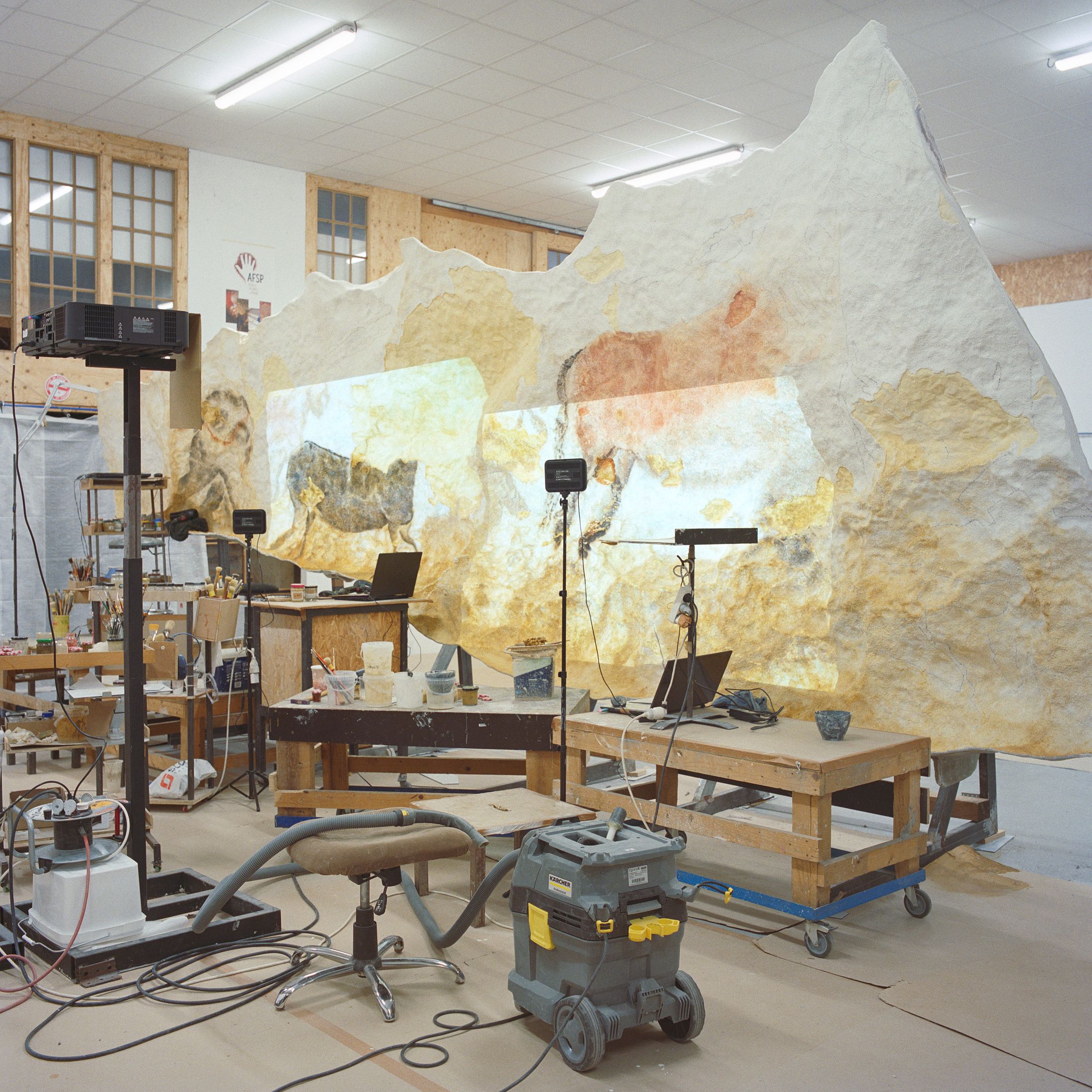
Production of a new facsimile of Lascaux III, Montignac-Lascaux, December 2024, 2024, inkjet print using pigment ink.
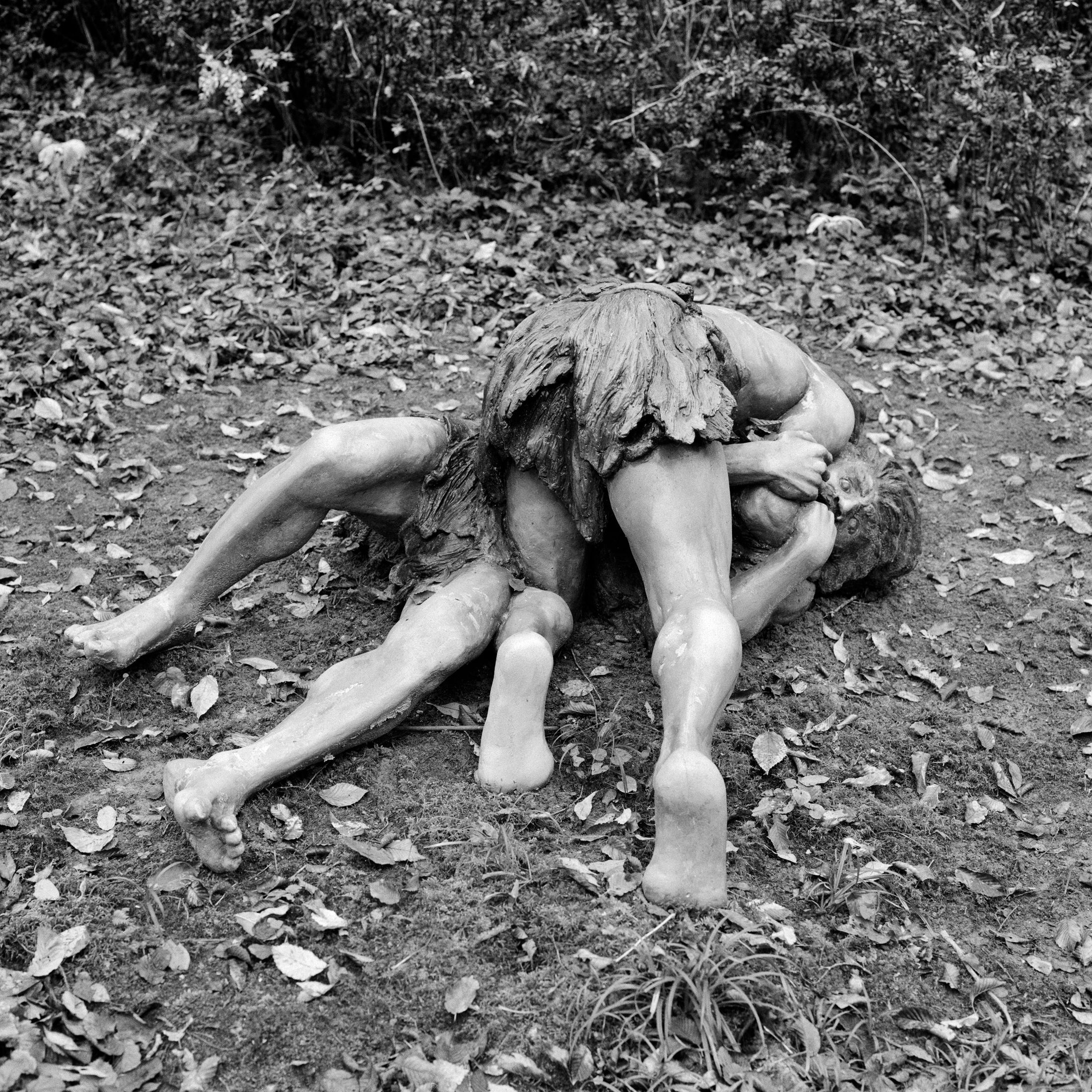
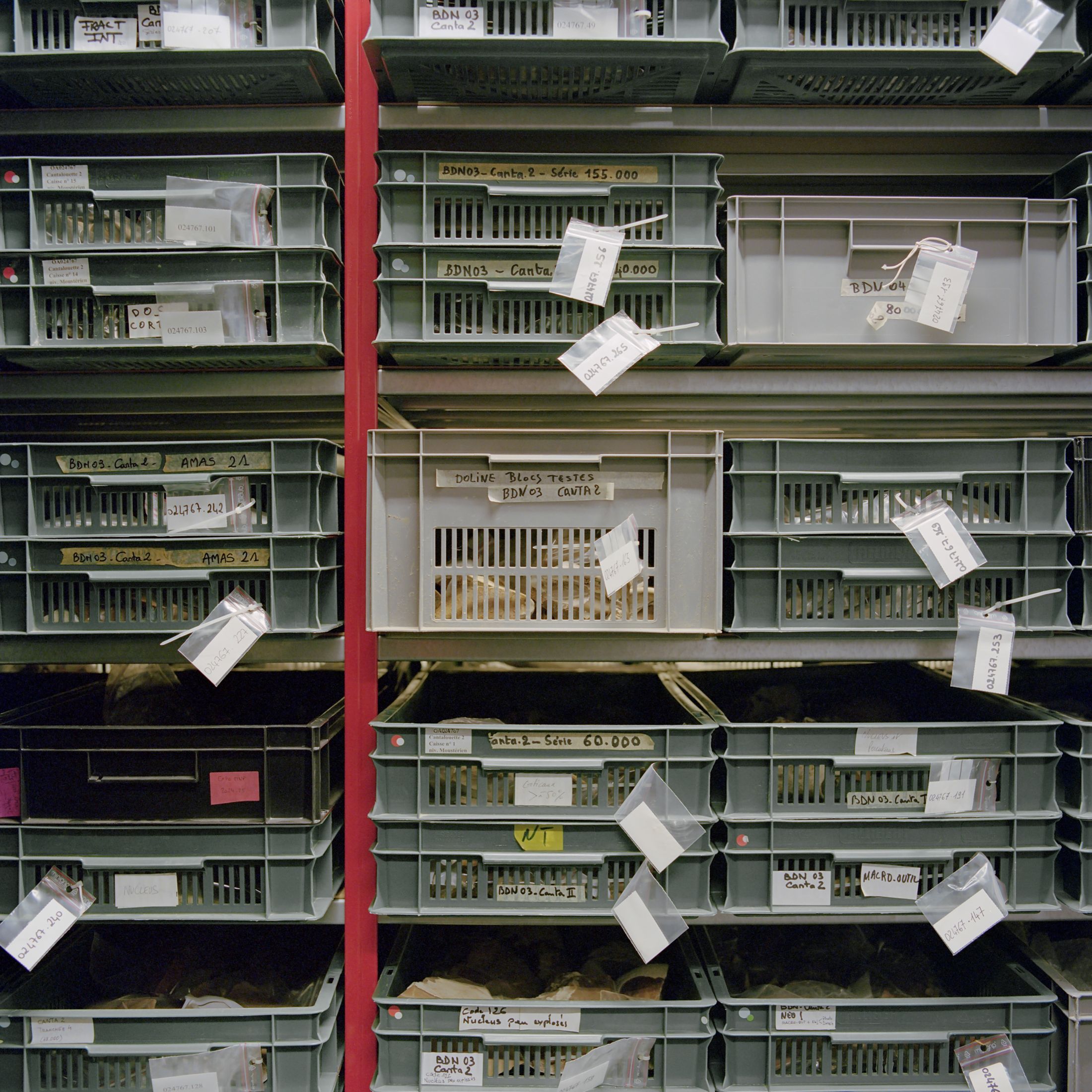

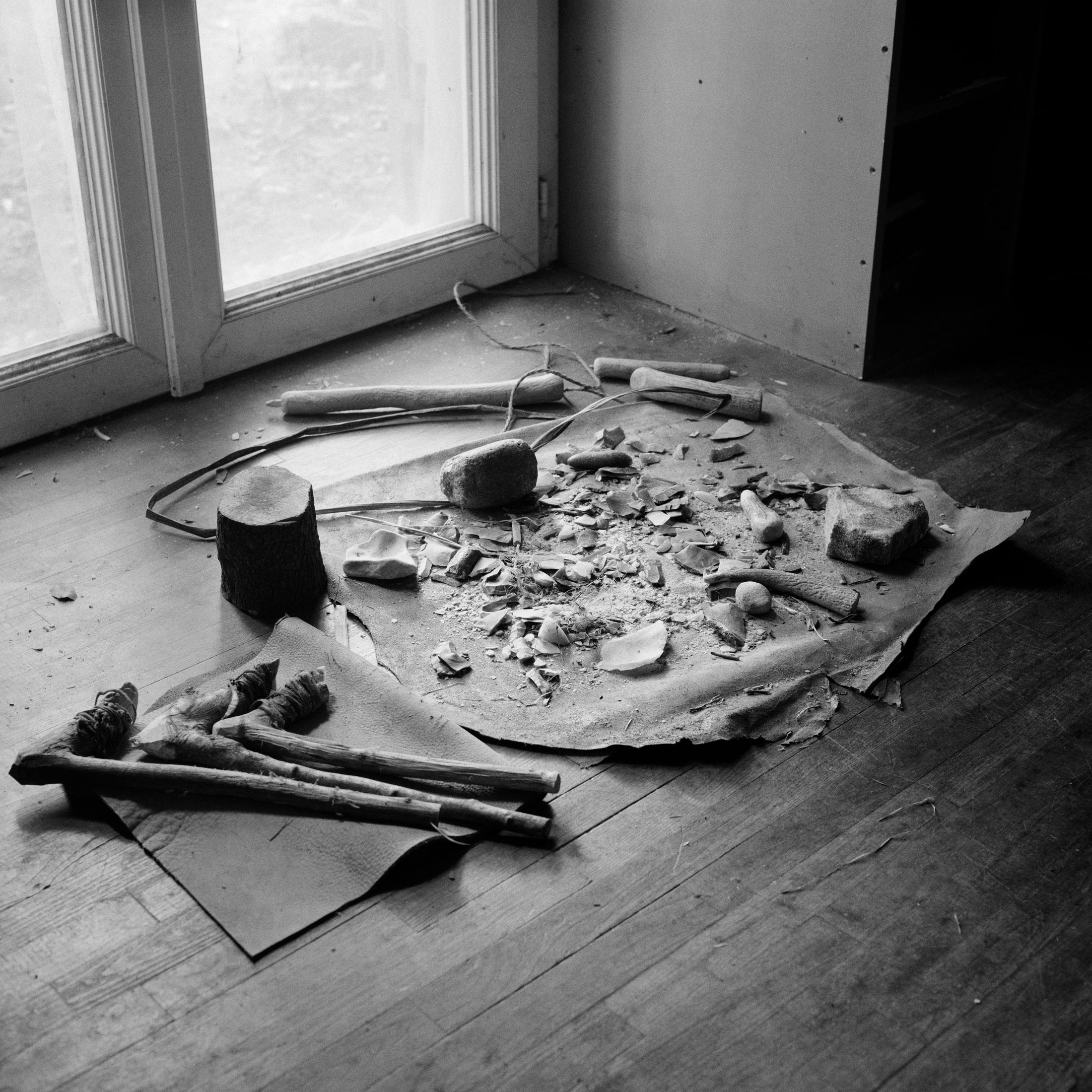
Flintworking for the production of “prehistoric” tools, Le Buisson-de-Cadouin, October 2024, 2024, inkjet print using pigment ink.

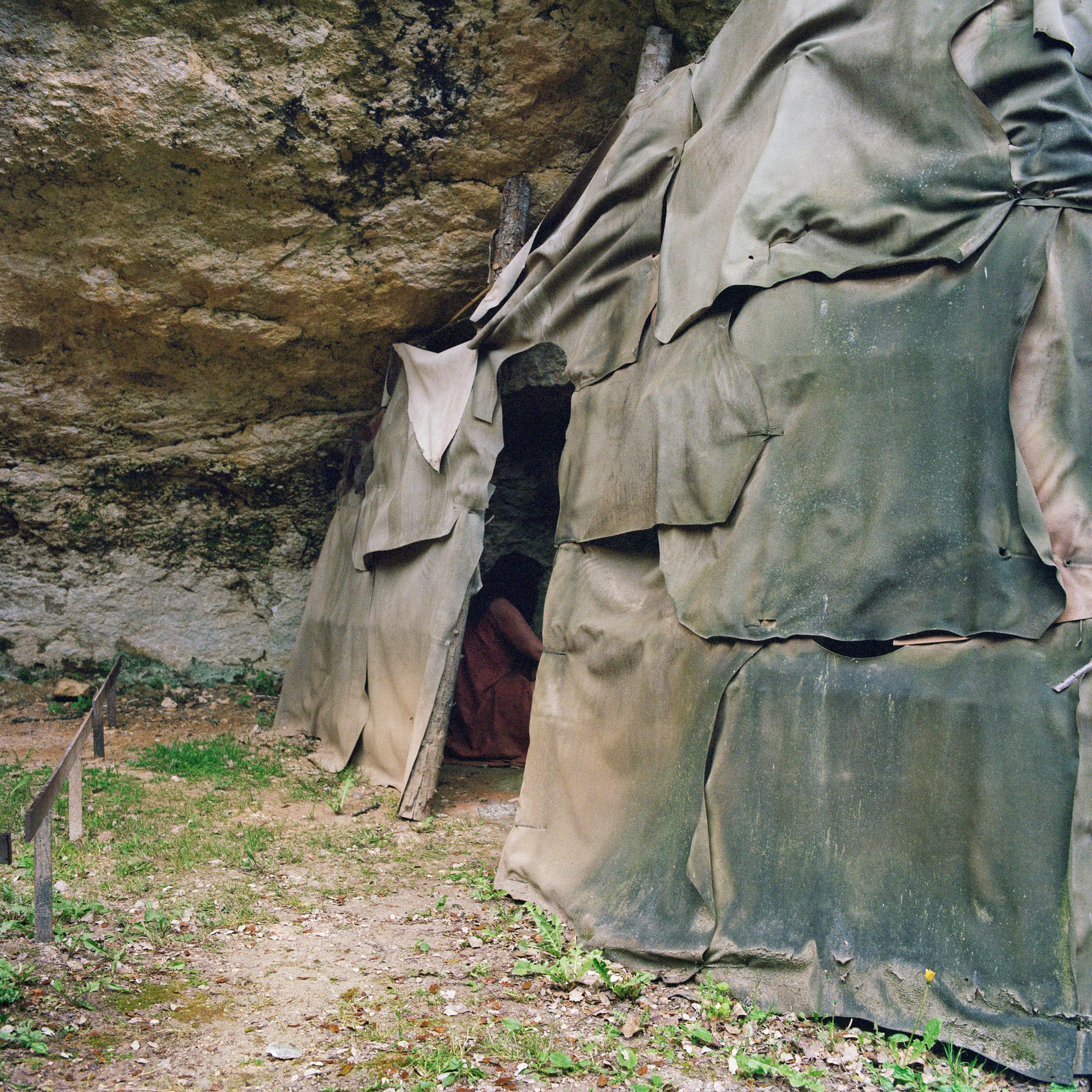
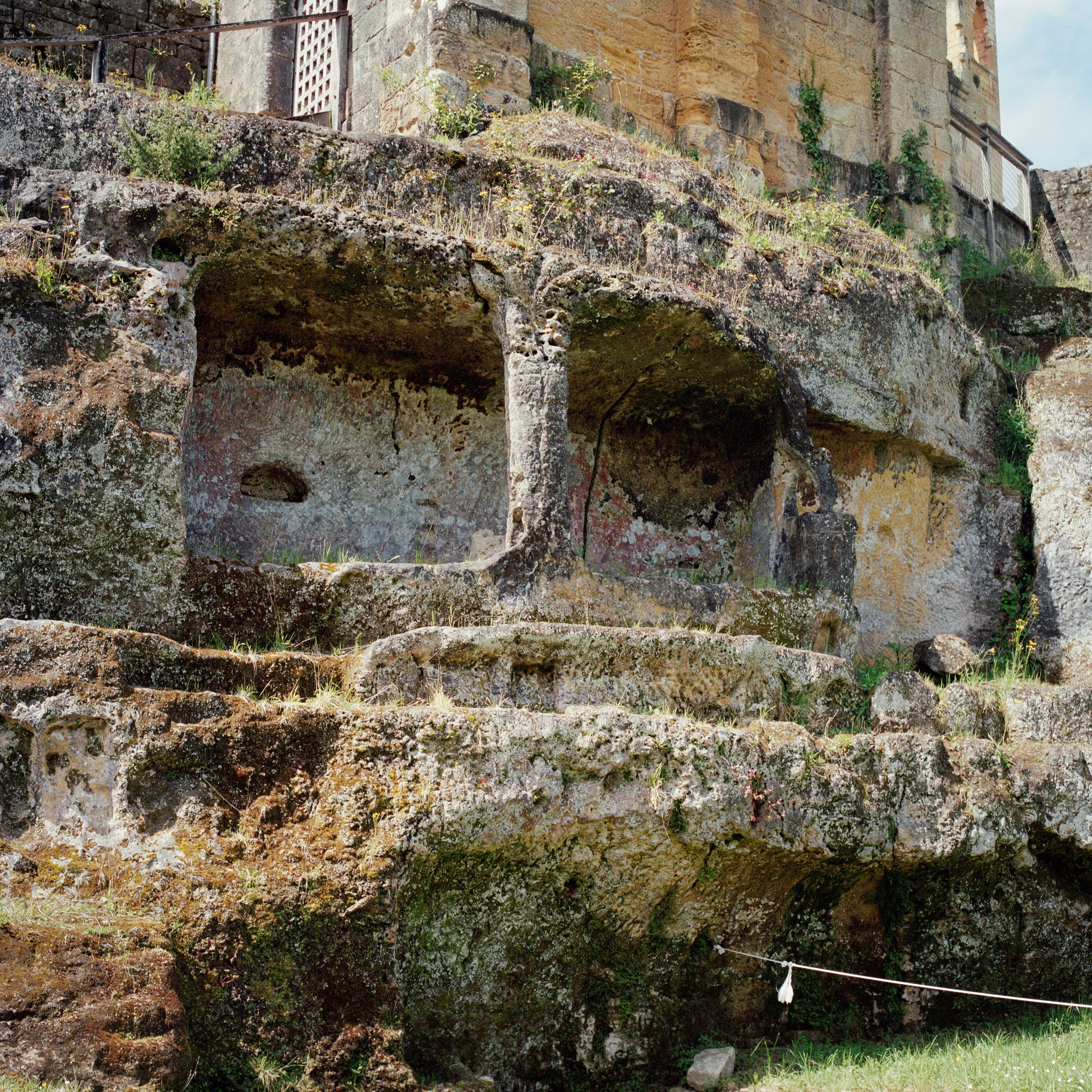
Reconstruction of a prehistoric dwelling in a rock shelter, Abri Cro-Magnon, Les Eyzies, April 2024, 2024, inkjet print using pigment ink.
Anne Leroy is a French artist with a background in photography and social sciences. She works primarily with photographic images, but also with text, sound, and film. She is currently writing her doctoral thesis at the University of Paris 8, in which she explores, both theoretically and practically, the power of images in the representation of people and territories. The research presented in this essay was conducted as part of an artist residency organized by the Dordogne-Périgord Departmental Cultural Agency (Périgueux, France) and the Pôle d’interprétation de la Préhistoire (Les Eyzies, France).