Kyiv, or The Long Night Never Ends: Intermedia Art in the Age of War
Kyiv, or The Long Night Never Ends: Intermedia Art in the Age of War
by Herbert Kopp-Oberstebrink,

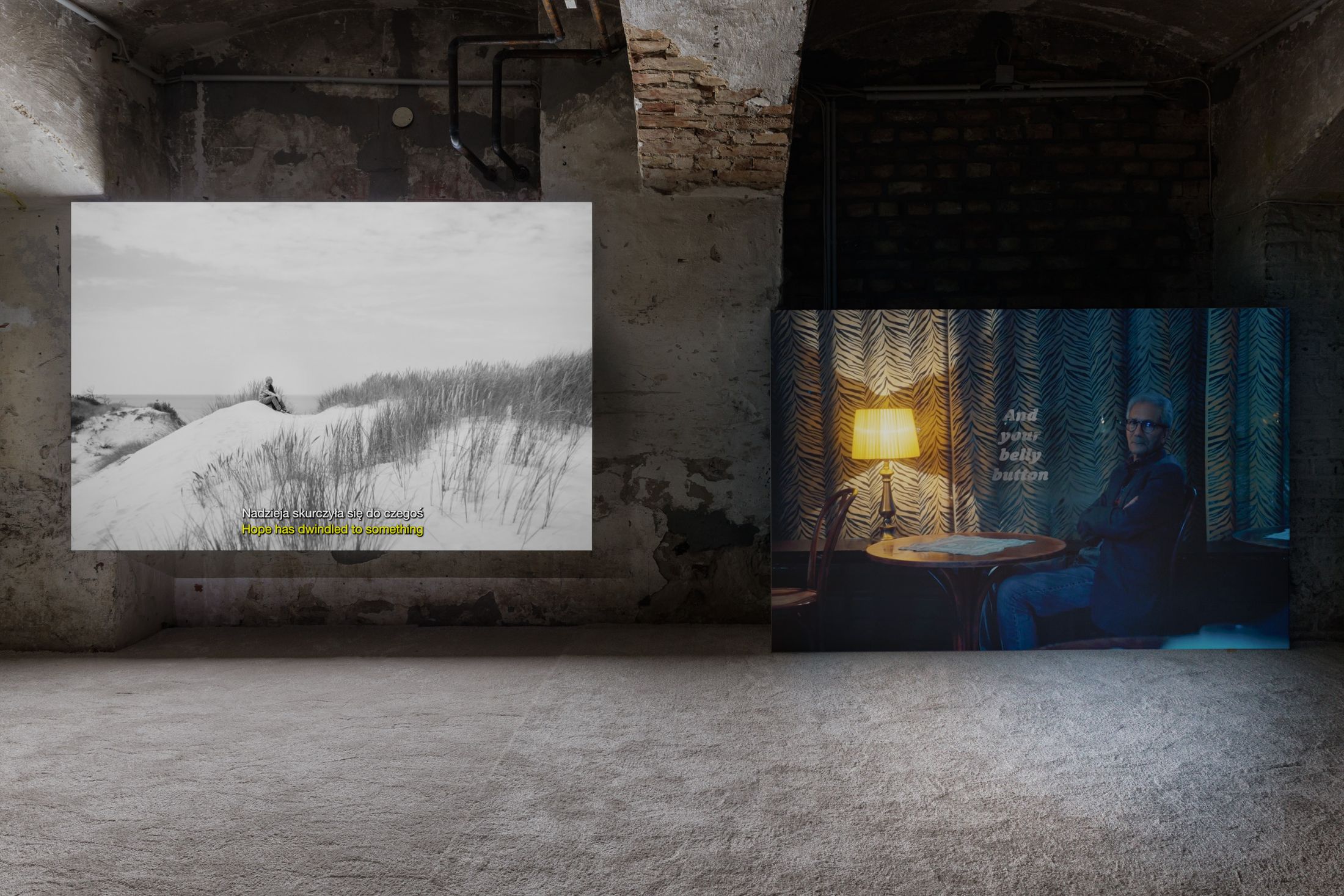

Assaf Gruber, Miraculous Accident, 2024–25, video still, installation view at Kyiv Biennial – A Bird That Cannot Land, KW Institute for Contemporary Art, Berlin, 2026 | © Assaf Gruber and Cask Films, Courtesy: the artist. Photo: Frank Sperling
The current edition of the Kyiv Biennial explores the fractures and upheavals that wars and colonialism etch into people’s lives, bodies, and spaces. It raises the question of whether an intermedia aesthetic is the approach of choice for art in times of multiple crises—and answers it through the diversity and power of the video installations on display.
The curatorial concept of the exhibition unfolds against the backdrop of the geopolitical space of “Middle-East-Europe,” which, according to the curators, encompasses post-Soviet Eastern Europe, Central and Southwest Asia, and the Mediterranean region. The experiences of a reality rife with violent conflicts lead here to the uprooting of people. Under such conditions, migration becomes the predominant relationship between individuals and space, and exile becomes the human conditionof our present. The eponymous bird that cannot land comes from the autobiographical narrative Zami by the American author and activist Audre Lorde (1934–1992) and serves as the exhibition’s guiding image—a metaphor for a restless, unsettled life that never reaches its destination and is constantly in a state of transition.
Centrally positioned in the KW’s main hall—and thus also programmatically central to the exhibition—is the expansive video installation Night Without Shadows and Light Without Rippling of Waves (2025) by Lesia Vasylchenko. In the upper part of the screen, natural history meets political archaeology; in the lower part, a seemingly endless dawn stands in contrast to the Ukrainian nocturnal sky. Decades of sunrises are compressed into a continuous emergence of light, while the night sequence uses historical film footage from 1918 to 2025 to condense moments from Ukraine’s political history into a fragmented yet coherent sequence. In this convergence of vastly different images—both technologically generated and historically sourced—the work also becomes a media-theoretical reflection on intermediality.
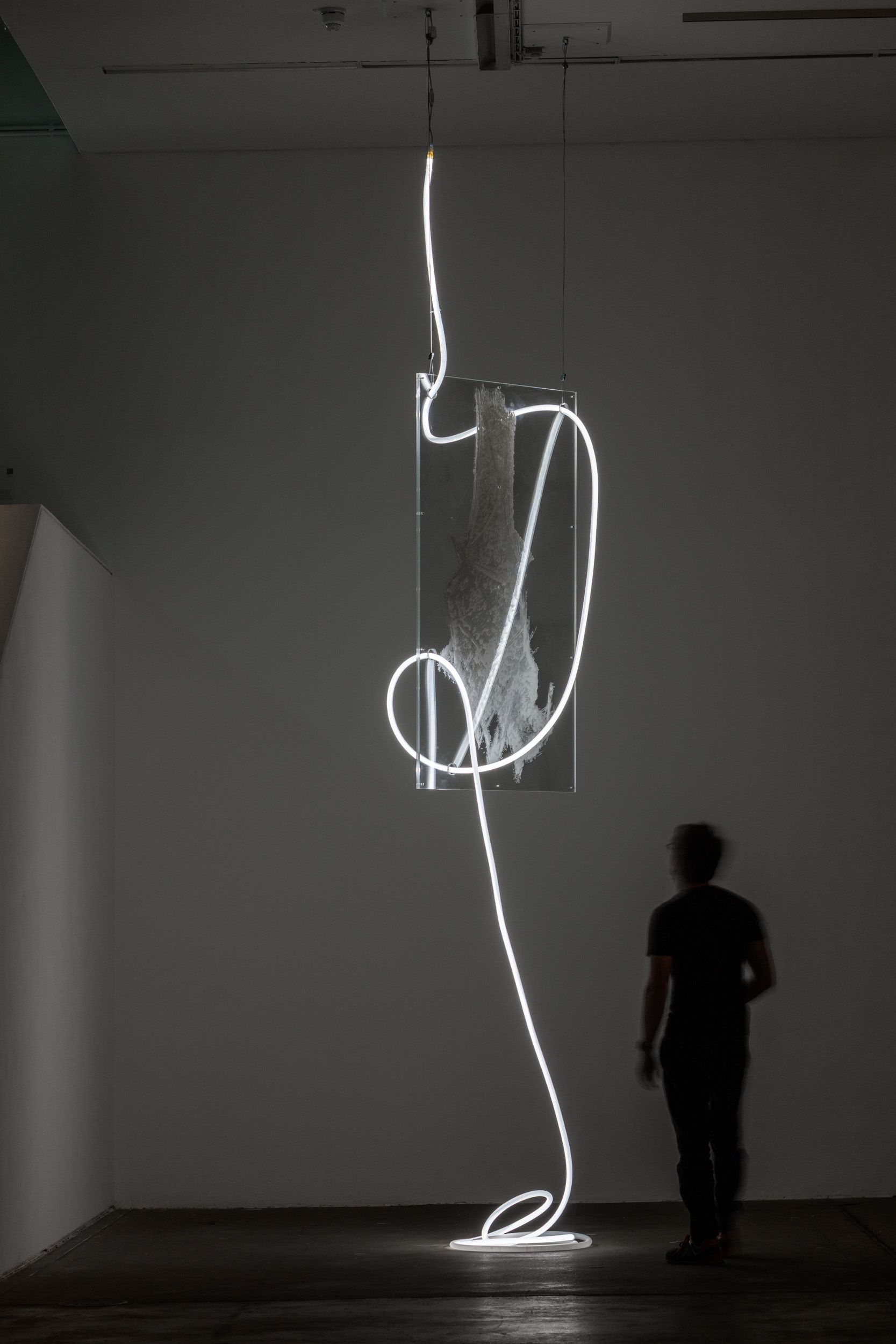
Flaka Haliti, I SHOUT, YOUR ECHO BOUNCE, WHAT AM I?, 2023, installation view at Kyiv Biennial – A Bird That Cannot Land, KW Institute for Contemporary Art, Berlin, 2026 | Courtesy: Christine König Gallery, Vienna, Deborah Schamoni, Munich and the artist. Photo: Frank Sperling
The central finding of the Kyiv Biennial is that the various forms of video art are capable of incorporating all the ruptures, temporal levels, and interweavings of historical and biographical time.
The central finding of the Kyiv Biennial is that the various forms of video art are capable of incorporating all the ruptures, temporal levels, and interweavings of historical and biographical time.
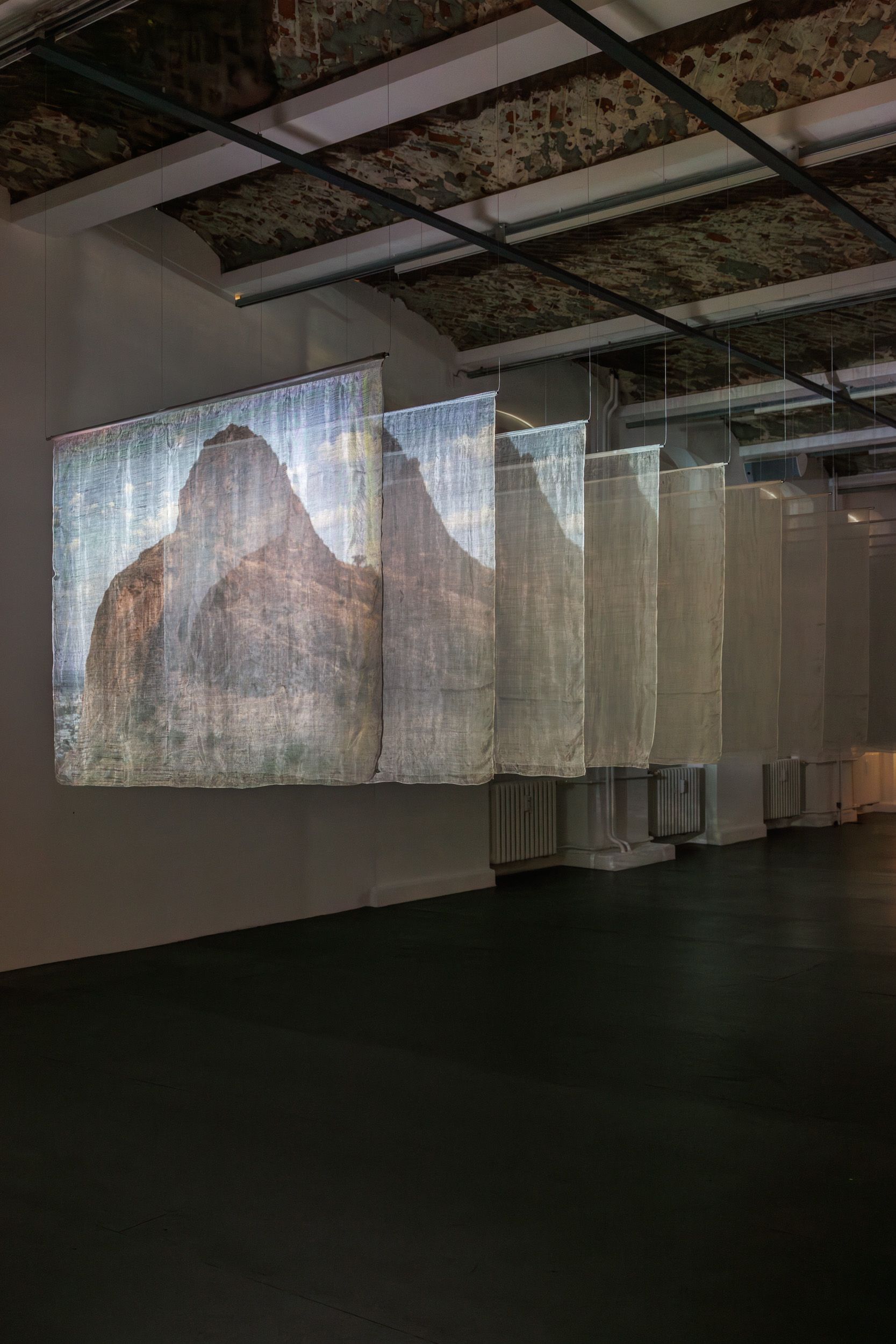
Saodat Ismailova, As We Fade, 2024, installation view at Kyiv Biennial – A Bird That Cannot Land, KW Institute for Contemporary Art, Berlin, 2026 | Courtesy: the artist. Photo: Frank Sperling
A Bird That Cannot Land is more than just a high-caliber exhibition of political art by forty international artists. It is a large-scale project that, in addition to numerous video installations and a few object-based works, also includes intensive artistic research, musical events, performances, and numerous discursive formats. What is striking, however, is the dominance of artistic formats featuring moving images from heterogeneous contexts compared to the numerically marginal remainder of the works. The central finding of the Kyiv Biennial is that the various forms of video art are capable of incorporating all the ruptures, temporal levels, and interweavings of historical and biographical time.For example, Assaf Gruber’s two-part video installation Miraculous Accident (2024–2025) is a grand filmic narrative about love in times of political turmoil, about the collision of emotions, memories, and political history, and the resulting uprooting. Drawing on newly discovered archival footage, Oleksiy Radynski’s Where Russia Ends (2024) reconstructs the history of colonialism and environmental destruction in Russian-occupied Indigenous territories. Radynski not only highlights the catastrophic environmental destruction caused by extractivism but also reflects on the extent to which filmic documentation itself was part of imperial expansion. Hito Steyerl, on the other hand, tells the story of the Nord Stream pipeline and its predecessors in her expansive video installation THE LEAK (2024). In doing so, she exposes the propaganda associated with this pipeline in both the East and the West.
Intermedia art is a hallmark of an era ravaged by armed conflicts and shaped by neocolonialism and a self-devouring capitalism. It seems that within the space of historical reflection thus created lies one of the last hopes that the light at the end of the night will reach us after all. (Translation: Gérard A. Goodrow-Jaber)

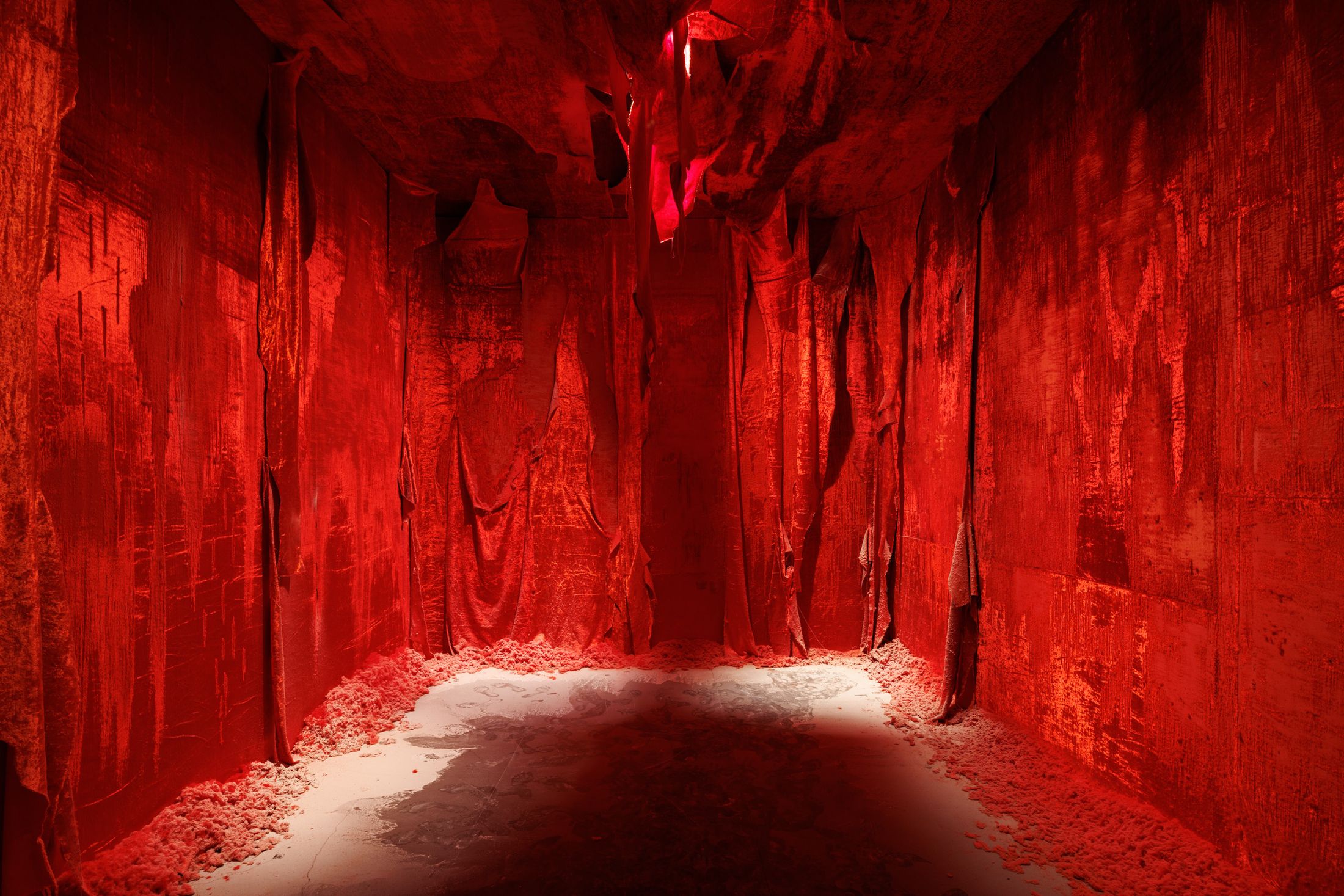
Gulnur Mukazhanova, Material as Memory, 2026, installation view at Kyiv Biennial – A Bird That Cannot Land, KW Institute for Contemporary Art, Berlin, 2026 | Courtesy: the artist. Photo: Frank Sperling

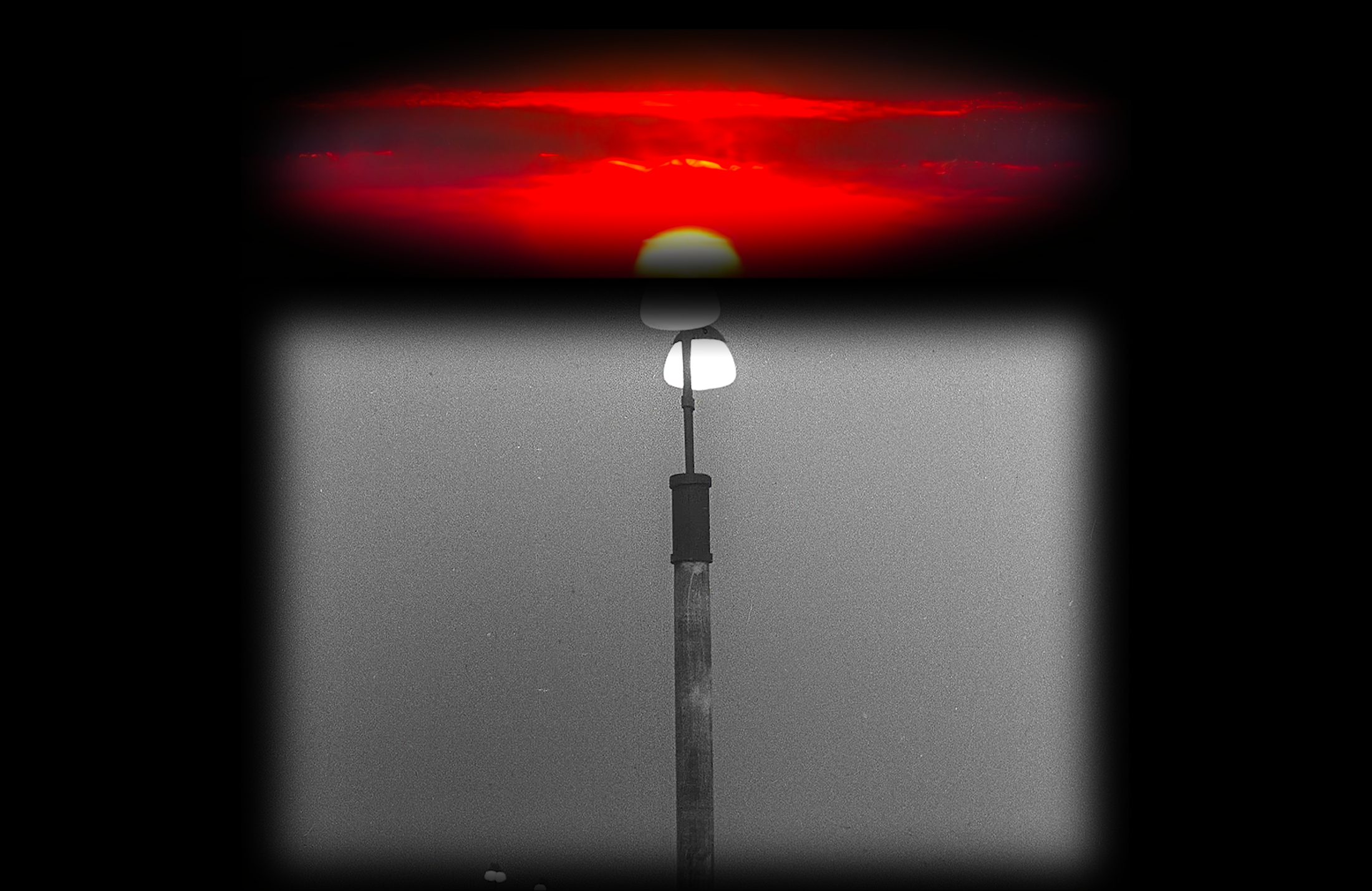
Lesia Vasylchenko, Night Without Shadows and Light Without Rippling of Waves, 2025 | © Lesia Vasylchenko, Courtesy: the artist
The Kyiv Biennial is a nomadic, international project that interweaves artistic, political, and social issues. In addition to the exhibition, A Bird That Cannot Land features a program of live events and discussions and is on view at the KW Institute for Contemporary Art in Berlin through September 13, 2026.