Jon Rafman: On the Ruins of the Internet
Jon Rafman: On the Ruins of the Internet
by Jorge Sanguino,

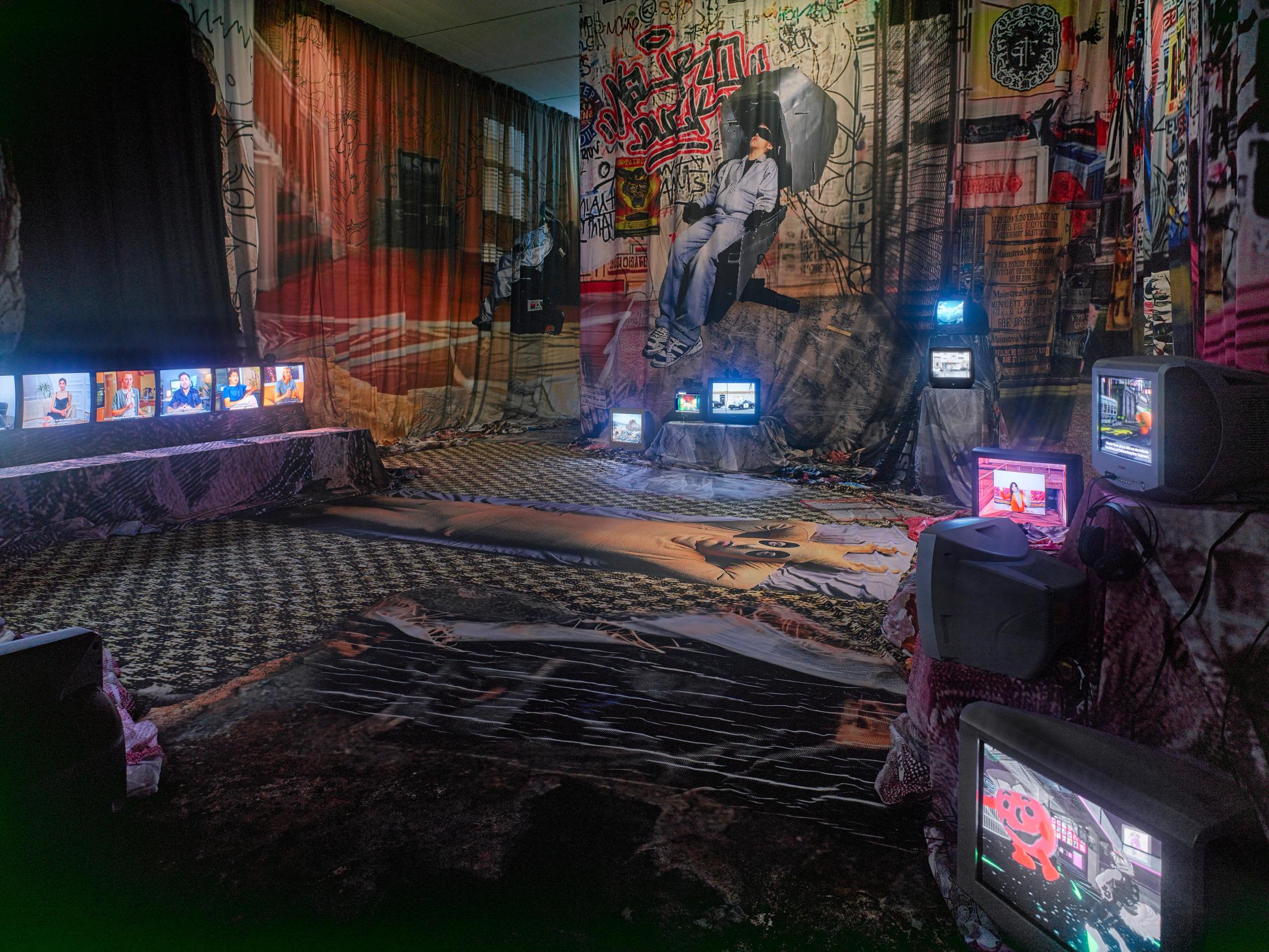

Jon Rafman: Main Stream Media, K21, Düsseldorf | Photo: Achim Kukulies
Media art in Canada developed in parallel with a distinct Canadian tradition of media theory: Ever since Harold Innis and Marshall McLuhan, communication technologies have not been understood there as neutral instruments, but rather as forces that shape perception, culture, and social organization. Arthur Kroker built on this tradition with his works of the 1990s, when he turned his attention to the emerging digital culture. Using terms such as “crash aesthetics,” “virtual class,” and “flesh-eating technoculture,” Kroker describes the Internet and digital networks as new regimes of perception and control. In doing so, he dismantles the early utopias of the web and conceives of digital media as spaces where power, subjectivity, and the body are radically reconfigured.
This theoretical framework is central to understanding Jon Rafman’s mid-career retrospective, Main Stream Media, at the Kunstsammlung NRW, curated by Karen Archey and Doris Krystof. The exhibition confronts visitors with the harsh realities of the Internet and image-production technologies in the age of artificial intelligence. The spatial staging alone makes this experience physically tangible. Textile and plastic draperies cover columns and walls, while carpets printed with mosaics of digital and Internet-based images create a space that smells of synthetic material.
Main Stream Media brings together an extensive body of work from 2008 to the present, divided into three sections and spread throughout the exhibition space. At its center is Nine Eyes of Google Street View, Rafman’s ongoing project of screenshot-based found photography. For this project, the artist sifts through images captured by Google Street View’s nine-lens camera to isolate eerie, violent, or absurd moments made visible by the platform’s automated and indifferent gaze. Rafman’s interest extends beyond serendipitous finds. Equally crucial is the disappearance of the digital. Images are deleted, overwritten, or rendered untraceable, thereby subsequently evading the archive. For example, based on the image 58 Lungomare 9 Maggio, Bari, Apulia, Italy, 2009, which later disappeared from Google Maps, Rafman constructed a love story in which the only photograph of the beloved was accidentally taken by a Google Street View car and can no longer be found.
The disappearance of digital spaces, forums, and video games is one of the central themes of the retrospective. In Punctured Sky (2021), Rafman follows former gamer Jon’s search for a computer game from his childhood that seems to have vanished from both the Internet and collective memory. The visual language is strongly inspired by video game graphics and the interface design of the early Internet.

Jon Rafman, (Puppet Man I), 2022 | Courtesy of Jon Rafman and Sprüth Magers, Photo: Ingo Kniest
While the post-industrial remnants of twentieth-century factories still possess a certain aesthetic appeal, the dirty desk with a computer screen appears as a recurring motif in Rafman’s work, embodying an increasingly decaying digital world.
While the post-industrial remnants of twentieth-century factories still possess a certain aesthetic appeal, the dirty desk with a computer screen appears as a recurring motif in Rafman’s work, embodying an increasingly decaying digital world.
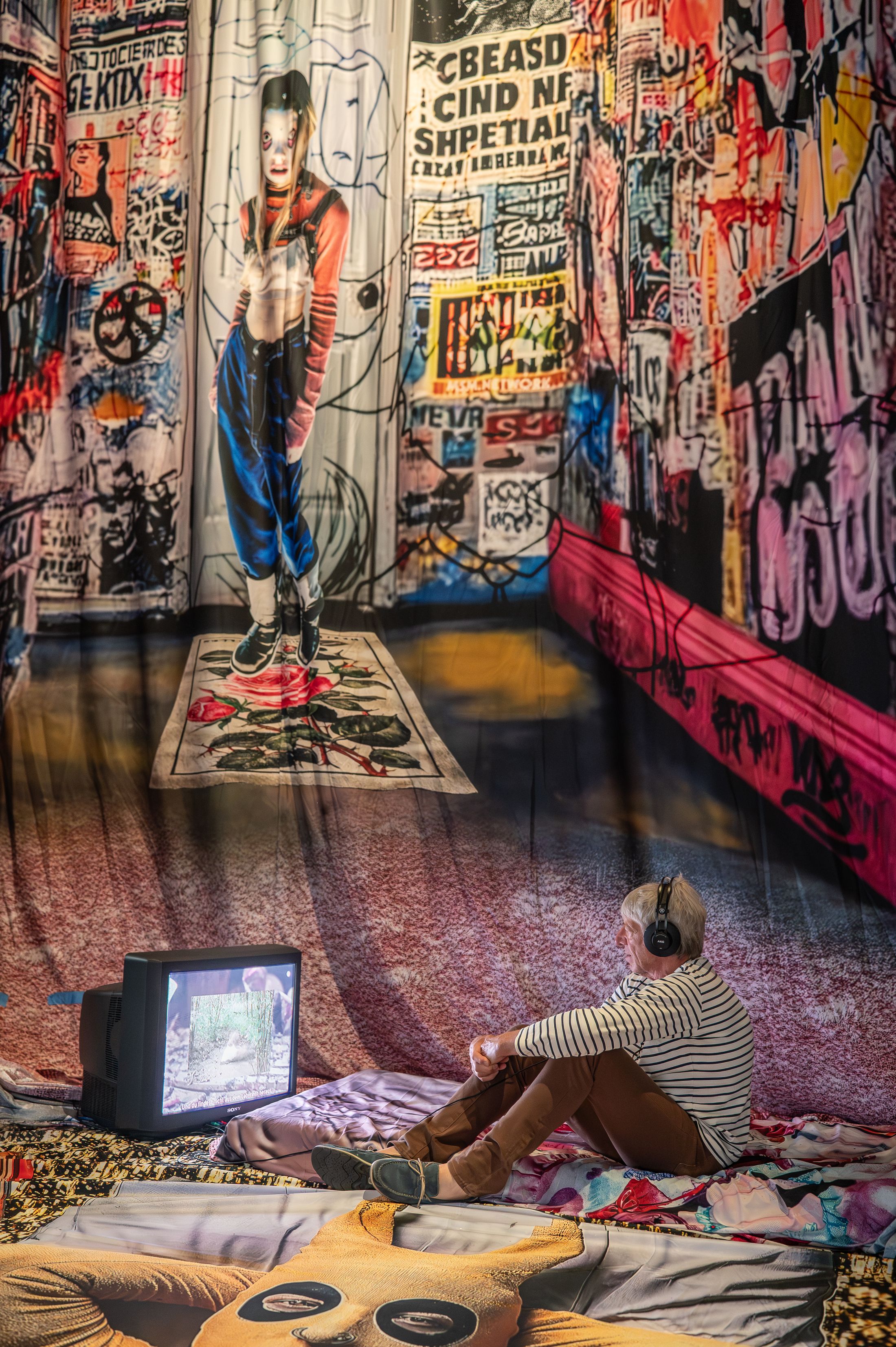
Jon Rafman: Main Stream Media, K21, Düsseldorf | Photo: Linda Inconi-Jansen
Digital spaces, too, have now become ruins: Forums no longer exist, images cannot be downloaded, and URLs fail to load. While the post-industrial remnants of twentieth-century factories still possess a certain aesthetic appeal, the dirty desk with a computer screen appears as a recurring motif in Rafman’s work, embodying an increasingly decaying digital world. Dirty keyboards, scraps of junk food, stacks of books, and tangled cables point to a contemporary dystopia in which the social, the political, and the physical appear equally alienated in both material reality and digital space.
Catastrophonics I–IV, a four-part video series by Rafman’s musical alter ego, Iron Tears, uses AI-processed disaster footage to transform fires, floods, and scenes of collapse into hypnotic visual sequences. The AI-generated transitions between scenes place viewers in a first-person perspective, allowing them to experience the disaster videos up close while simultaneously feeling revulsion at the violence of these viral images.
In several works, Rafman draws on first-person narration. In Ebrah K’dabri, however, this strategy reaches its limits. The videos are based on user submissions on platforms such as Reddit. The narratives often read like stereotypical descriptions of Western middle-class subjects: groupies, young people searching for new identities, and other figures of digital self-presentation. These stories are brought to life through AI-generated images, yet the execution remains weak. Instead of opening up a reflection on artificial intelligence, the installation reduces it to a mere tool for producing illustrative images.
Main Stream Media, Rafman’s latest work—a two-and-a-half-hour video—also exhibits this weakness at times. Where the use of new AI technologies threatens to dissolve Rafman’s narrative power, Dream Journal 2016–2019—a film produced with 3D software and CGI—evokes the bestiary described by Umberto Eco in The Name of the Rose. Half-animal and half-human figures—as found in the tradition of medieval painting and in the works of Hieronymus Bosch—populate these images. In this work, the narrative is superseded by the visual language: a representation that achieves its goal without relying on language. (Translation: Gérard A. Goodrow-Jaber)

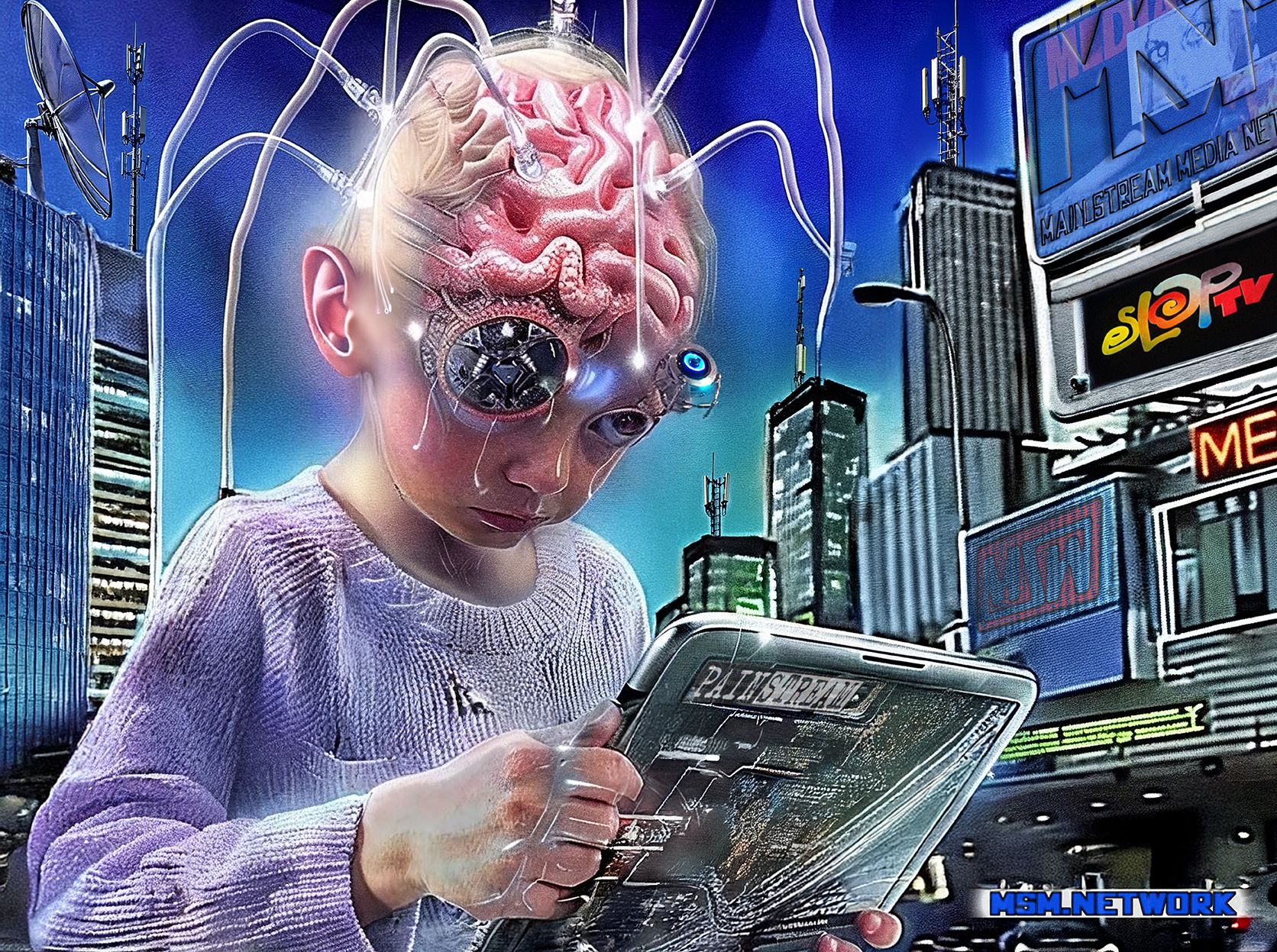
Jon Rafman, Main Stream Media. Poster, 2025 | © Jon Rafman, Courtesy of Jon Rafman and Sprüth Magers


Jon Rafman: Main Stream Media, K21, Düsseldorf | Photo: Achim Kukulies
Jon Rafman (b. 1981 in Montreal) lives works in Los Angeles. After studying philosophy, literature, and film, he graduated from the School of the Art Institute of Chicago in 2008. Rafman’s artistic practice combines masterfully narrated stories with fantastical, grotesque imagery and immersive spatial installations. Jon Rafman: Main Stream Media is on view at K21 Kunstsammlung Nordrhein-Westfalen, Düsseldorf, from May 30 to September 27, 2026.