Subterranean: What Sustains the Surface
Subterranean: What Sustains the Surface
by Hyunjoo Byeon,

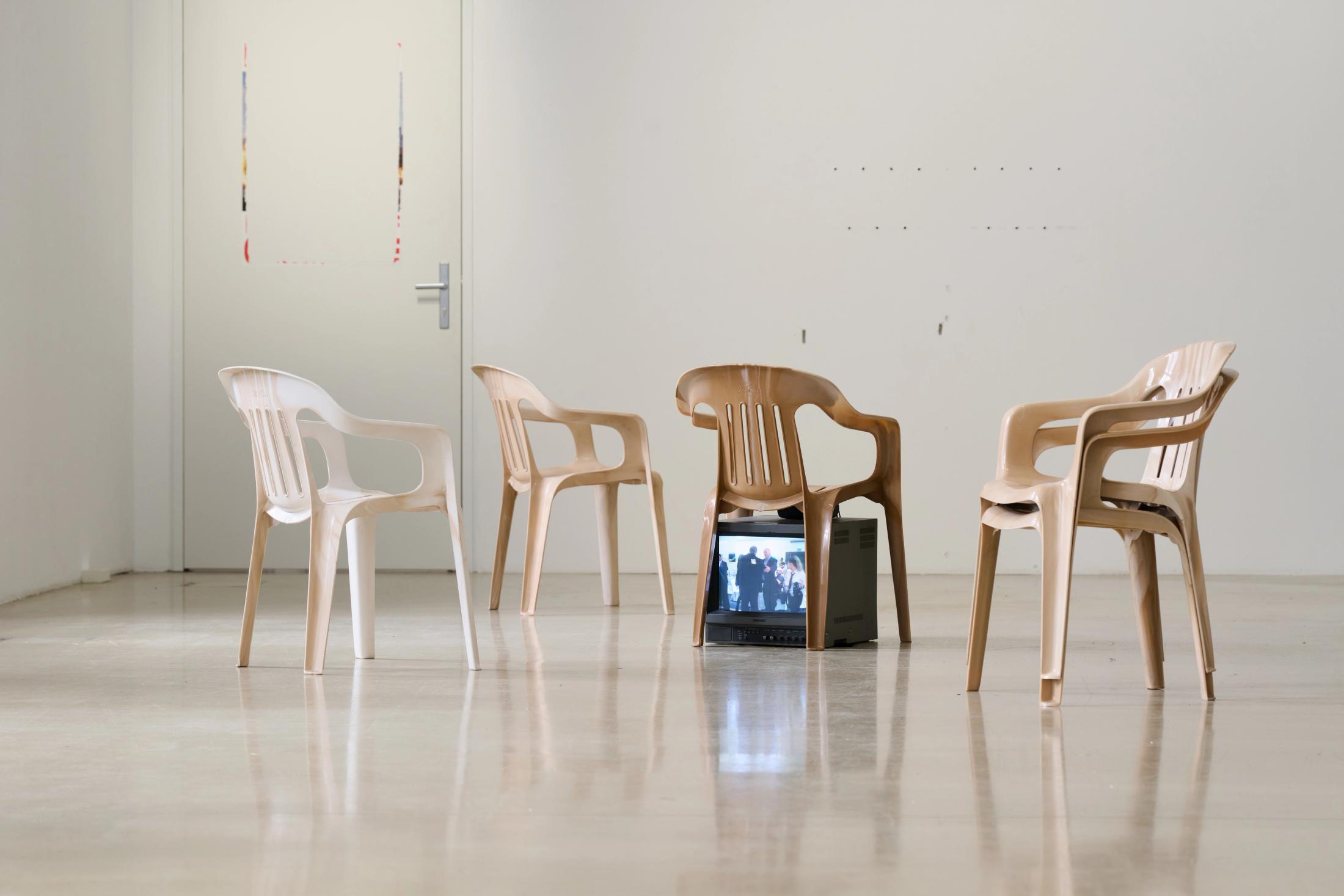

Exhibition view, front: Marina Xenofontos, NEW FAITHFUL, 2023; back: Ghislaine Leung, Maintenance, 2025 | photo: Markus Gradwohl
The visible is merely the surface. In Art Power (2008), Boris Groys observes that museum visitors see “only the surface of the artwork,”❶ while the systems of maintenance, restoration, and material support that sustain it remain largely behind this surface. Subterranean at Kunstraum Niederoesterreich, curated by Sarah Johanna Theurer and Aditi Kapoor, takes this tension beyond the artwork itself. Across production, finance, communication, migration, and art institutions, the exhibition draws attention to the structures, labor, and costs that are usually relegated to invisibility or treated as background noise, making them part of what is visible.
Upon entering the exhibition, the first work to catch the eye is Marina Xenofontos’s NEW FAITHFUL (2023): Monobloc chairs are positioned over and around a CRT monitor playing footage of the “Lemon Dance,” a tradition carried abroad by Cypriot communities after the island’s division in 1974. What at first glance appears playful holds a history of displacement, while the continuation of the dance keeps a connection to a place left behind.
The chairs imply another history. Produced by the Cypriot plastics manufacturer Lordos United, their marbled white-and-brown surfaces emerged during the brief transition from one color batch to another. Nothing is physically wrong with them. However, the pattern falls outside the standard expected of a mass-produced object, making the chairs difficult to classify and sell. Xenofontos places this commercially rejected commodity beside a history of displacement without making them equivalent. Two different forms of being out of place remain in uneasy proximity.
Ghislaine Leung’s Maintenance (2025) is almost invisible, threading through the entire exhibition rather than occupying one place. Holes, dust, remaining wall labels, installation marks, and worn surfaces have been left where they would normally disappear between exhibitions. Sections behind the white walls are left open, exposing cables and supporting structures. These traces redirect attention from the individual works back to the gallery itself.
After an exhibition, the white cube does not simply return to a “pure” state. It is repeatedly cleaned, repaired, and reset. Leung interrupts that process, revealing neutrality as something continuously produced through labor. The work’s near-invisibility is also precarious. Without knowing what has deliberately been left, some of these traces may register simply as part of the room rather than as an intervention.
In Thuy-Han Nguyen-Chi and Andrew Yong Hoon Lee’s The light comes in the name of the voice (movement II) (2026), the invisible takes another form. Steel pipes run along the floor and walls, carrying low voices through the gallery. The work emerged from Nguyen-Chi’s conversation with a former political prisoner who recalled how prisoners in solitary confinement communicated secretly through sewage pipes. Part of the architecture of separation became a way to reach another person.
Among the voices moving through the pipes are passages from Rosa Luxemburg’s prison letters, alongside references to writers, poets, and musicians, including Theresa Hak Kyung Cha, whose own writing repeatedly crosses linguistic and cultural borders. The polyphonic voices suggest how words and sound can travel beyond imposed boundaries. Some pipes, however, remain disconnected, while certain sounds never seem to reach one another. Communication is not guaranteed here.
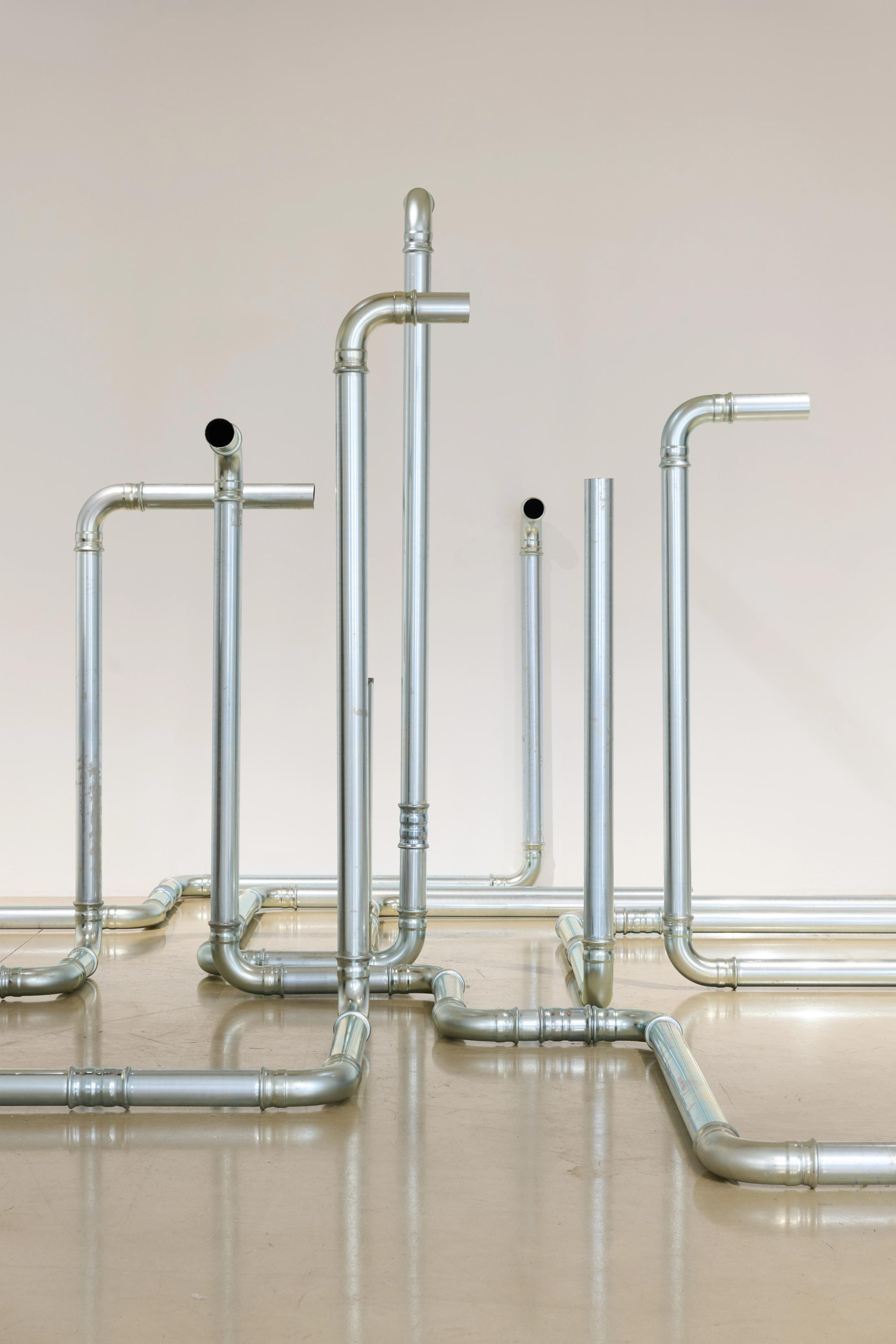
Installation view of Thuy-Han Nguyen-Chi and Andrew Yong Hoon Lee, The light comes in the name of the voice (movement II), 2026 | Photo: Markus Gradwohl
Subterranean is most convincing when invisibility is treated not as absence but as something actively produced. What disappears from view has to be hidden, cleaned away, standardized, recalculated, or pushed underground.
Subterranean is most convincing when invisibility is treated not as absence but as something actively produced. What disappears from view has to be hidden, cleaned away, standardized, recalculated, or pushed underground.
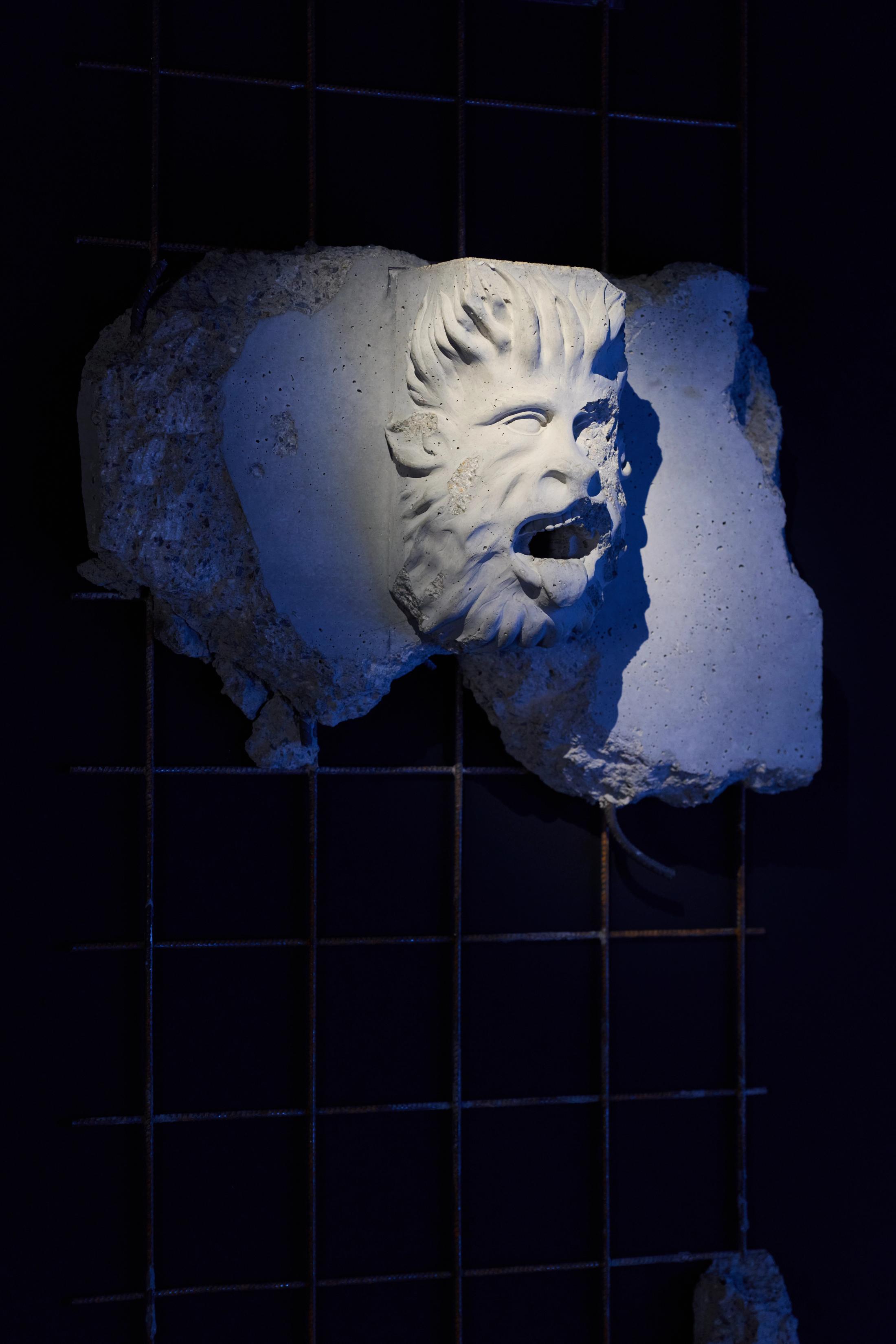
Installation view of Valentin Noujaïm, Pacific Club, 2023 | Photo: Markus Gradwohl
Joyce Joumaa’s Untitled (2025) shifts this pressure to finance. For eight minutes, a hand enters numbers into an analog calculator. The action is ordinary, almost banal, yet its repetition slowly becomes oppressive. Made in relation to Lebanon’s financial collapse, which began in 2019, the video does not represent the economic crisis through images of banks, demonstrations, or ruined streets. Instead, it condenses the crisis into recalculation, a form of everyday labor imposed by instability itself. Who bears the cost for keeping everyday life going when a financial system fails?
Valentin Noujaïm’s Pacific Club (2023) takes us to an actual subterranean space beneath La Défense, Paris. The club opened there in 1979 and became a rare meeting place for young Arabs from the Parisian suburbs, who often faced exclusion elsewhere. Noujaïm reconstructs the disappeared space through memories, archival material, and staged images. What emerges is more than a nostalgic account of a lost nightlife: Another social world underneath the architecture of French economic modernity comes into view.
The contrast is stark. Above ground, the glass towers of La Défense produce an image of finance, corporate power, and national progress. Beneath them, another history was being made through migration, racism, desire, music, and the effort to belong. Pacific Club is the work that stays with me the longest. Perhaps it is because it is the only one where depth stops being a structural metaphor and becomes a space someone actually occupied. Here, the structure is no longer abstract but lived, transformed, and remembered by those who moved through it. One of the reference books presented in the exhibition, Keller Easterling’s Extrastatecraft (2014), describes infrastructure space as “an operating system for shaping the city.”❷ Seen through the lens of Pacific Club, La Défense appears as a structure that organizes access, exclusion, and belonging.
Subterranean is most convincing when invisibility is treated not as absence but as something actively produced. What disappears from view has to be hidden, cleaned away, standardized, recalculated, or pushed underground. Yet invisibility is not produced in the same way each time. A usable object is classified as defective, a gallery is cleaned back to neutrality, financial instability is absorbed through repeated calculation, and a social history is pushed beneath the image of the corporate city. Theurer and Kapoor describe “systems that depend on human effort, yet render it invisible.”❸ That effort is among the conditions that allow the surface to appear stable in the first place.
What sustains the surface is never neutral.
- ❶
Boris Groys, Art Power (MIT Press: 2008), 35.
- ❷
Keller Easterling, Extrastatecraft: The Power of Infrastructure Space (Verso: 2014), 13.
- ❸
Sarah Johanna Theurer and Aditi Kapoor, “Introduction,” in: Subterranean, exhibition brochure, Kunstraum Niederoesterreich, Vienna, 2026.

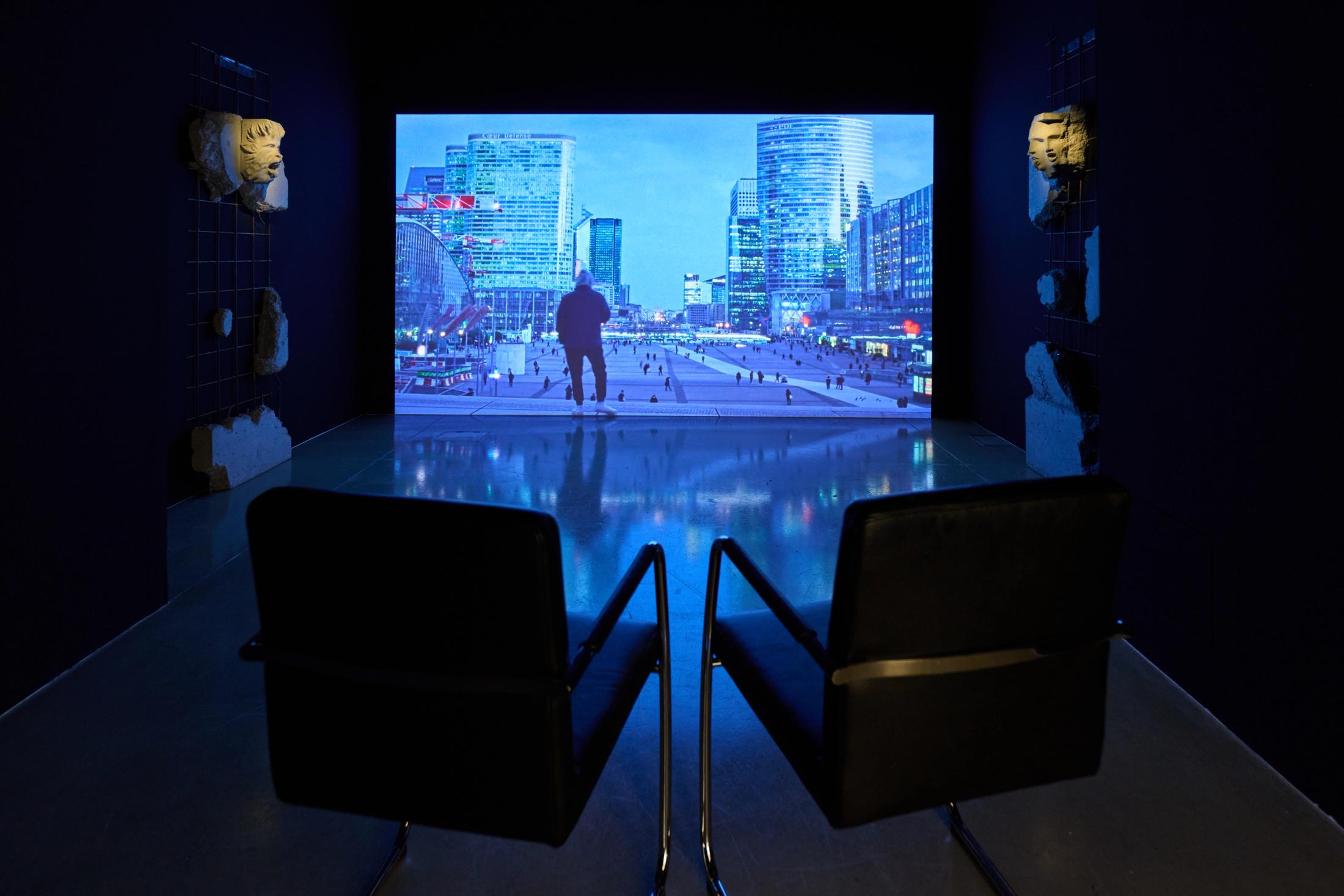
Installation view of Valentin Noujaïm, Pacific Club, 2023 | Photo: Markus Gradwohl

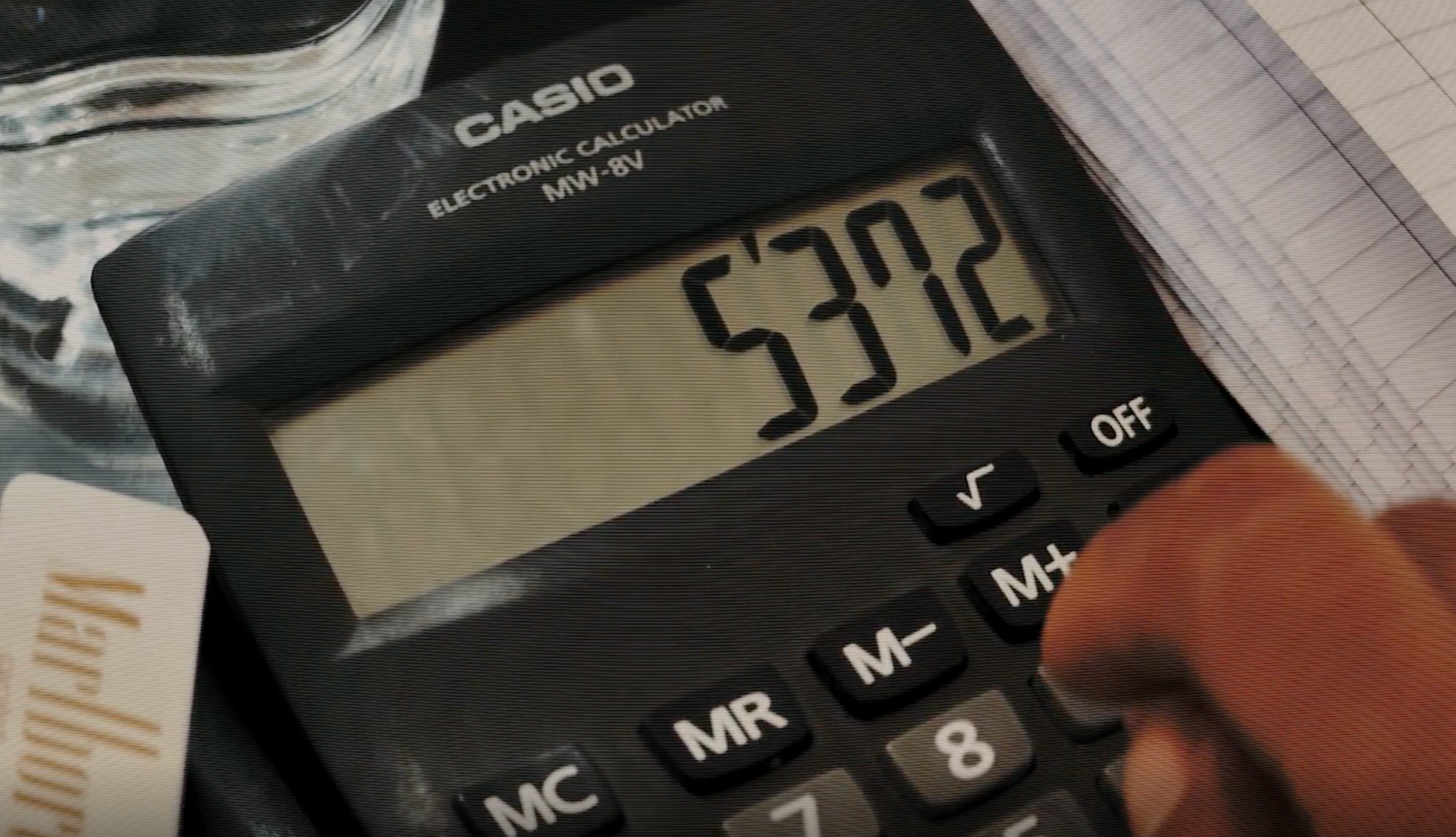
Joyce Joumaa, Untitled, 2025, video capture
Subterranean, curated by Sarah Johanna Theurer and Aditi Kapoor, is a group exhibition featuring works by Joyce Joumaa, Ghislaine Leung, Thuy-Han Nguyen-Chi & Andrew Yong Hoon Lee, Valentin Noujaïm, and Marina Xenofontos. Subterranean is on view at Kunstraum Niederoesterreich in Vienna through November 7, 2026. This review is a collaboration with the Vienna-based association Verein K and its “Visiting Critics Vienna” residency program.